

We romanticize the games we grew up on for four reasons that have almost nothing to do with the games. Memories formed roughly between ages 10 and 30 come back more vividly than memories from any other stretch of life, a pattern psychologists call the reminiscence bump. Hardware could not render detail, so your imagination filled the gaps, and what you remember now is your own artwork. You owned three games instead of three hundred, so you knew them completely. And you played in a room that had other people in it. Nostalgic video games are real emotional objects. They are also, in part, memory flattering itself. Both of those things are true at once.
In this article
- 1. Why do we romanticize the games we grew up on?
- 2. What is the reminiscence bump?
- 3. Why do you remember the game looking better than it did?
- 4. Why did owning three games beat owning three hundred?
- 5. Was it the game, or was it the free afternoon?
- 6. Why does playing alone feel different, even online?
- 7. What is the retro gaming aesthetic actually made of?
- 8. Were old games actually worse? Often, yes.
- 9. So why is the feeling still worth honoring?
- 10. What do you do with a feeling you cannot replay?
- The real problem with how nostalgia gets sold
- Frequently asked questions
1. Why do we romanticize the games we grew up on?
Because the memory and the game are not the same object, and we have no reliable way to tell them apart. When you say a game was incredible, you are reporting on a bundle: the game, your age when you met it, the room you played it in, who else was there, and how much of the world your brain had to invent to make the thing work. Only one item in that bundle is the game. The rest is autobiography. That is not a flaw in you. It is how memory is built, and it explains almost everything about why nostalgic video games hold on so hard.
2. What is the reminiscence bump?
The reminiscence bump is the well documented finding that people recall a disproportionate number of vivid, important memories from adolescence and early adulthood than from later decades. A systematic review in PLOS ONE by Munawar, Kuhn and Haque places the bump at roughly ages 10 to 30 when researchers ask for important memories, and reports that the best supported explanation is identity: events from that window are the ones that built the adult you became. So your favorite console era was not selected on merit. It arrived while you were still assembling a self, and it got folded into the blueprint.
3. Why do you remember the game looking better than it did?
Because you are not remembering the screen. You are remembering the picture you built out of it. A few dozen pixels could not show a face, so your head supplied one. A short loop of synthesized tone could not carry an orchestra, so your head heard the orchestra. Then you went back twenty years later, looked at the actual sprite, and felt something drop. You were comparing a real artifact against a mental image rendered by a ten year old with an unlimited budget and no deadline.
| What you remember | What was on the screen | Who did the work |
|---|---|---|
| A world that felt enormous | A small grid of repeating tiles, reloaded screen by screen | You, extending the map past the edge |
| A hero with a personality | A handful of animation frames and no voice at all | You, plus the box art |
| A sweeping soundtrack | A few simultaneous channels of synthesized tone on a loop | The composer, honestly. This one holds up |
| A story you still quote | A few screens of text between levels | You and the friends you retold it to |
| Hundreds of hours of play | Often four to eight hours of content, replayed many times | Scarcity, and an empty calendar |
4. Why did owning three games beat owning three hundred?
Because three games force a kind of attention that three hundred cannot buy. When a single cartridge cost weeks of allowance, you did not sample it and move on. You replayed it until you knew every room, every timing window, every place the music changed. That depth was not a virtue you chose. It was imposed by your budget, and it produced what a huge library prevents: total familiarity with one world. A backlog of three hundred titles is objectively a better deal and a worse experience, because it converts play into browsing and it moves the decision from what you love to what is next.
5. Was it the game, or was it the free afternoon?
Frequently the afternoon. Time felt abundant then in a way it does not now, and that changes what play even is. A twelve year old on a Saturday has no meeting after this, no notification worth answering, and no internal accountant asking whether four hours is a reasonable use of the day. You could get genuinely lost, which is the actual thing you miss. Load the same game today and you bring the accountant with you. The game is unchanged. Your relationship to unstructured time is not, and no remaster ships with a free Saturday in the box.
6. Why does playing alone feel different, even online?
Because the console used to live in shared space, and that made playing a social event whether you wanted one or not. There was a queue for the controller, an audience for your failures, and a parent walking through the shot. You were watched, which meant it mattered. A headset gives you voices without a room, and a room turns out to be most of it. When people say they miss couch co-op, they usually are not describing a control scheme. They are describing being in the same place as someone else while something happened.
7. What is the retro gaming aesthetic actually made of?
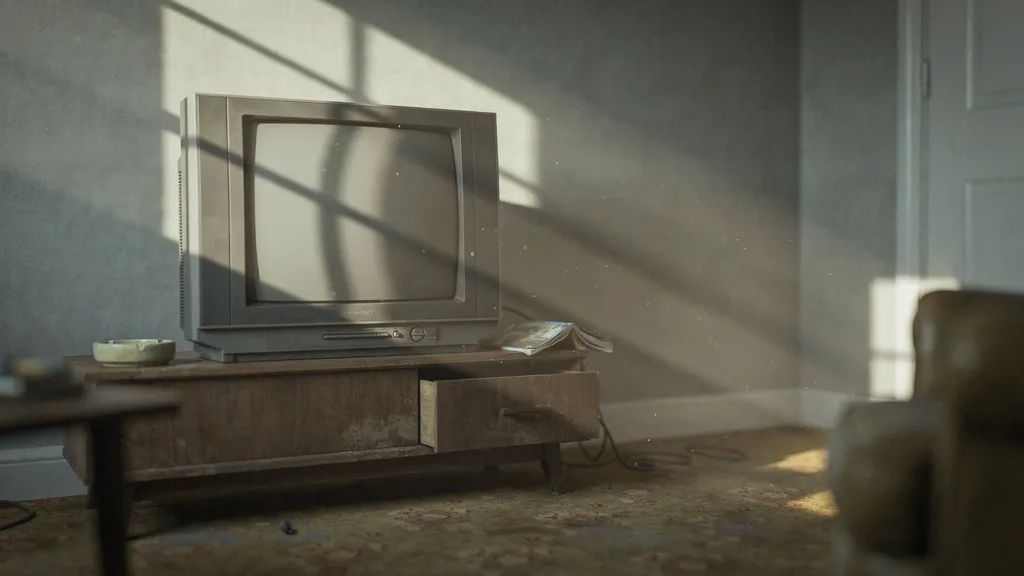
Constraint, mostly. The retro gaming aesthetic that people now chase on purpose was originally a list of things nobody could avoid: a tiny palette, chunky pixels, scanlines from a curved glass screen, a hum from the set, plastic that yellowed in sunlight. Every one of those was a limitation, and every one of them now reads as a style, because limitations produce a consistent visual language and abundance does not. That is why the look survived the technology. It is legible at a glance, and it says something about you the moment it is on a wall.
8. Were old games actually worse? Often, yes.
This is the part nostalgia writing usually skips, so let us say it plainly. A great deal of what came out in the pixel era was bad. Controls were stiff, difficulty was frequently unfair rather than hard, save systems were cruel or absent, and the industry shipped a lot of licensed filler that existed to sell a box. Survivorship bias does the rest: you remember the handful of masterpieces because those are the ones anyone still talks about, and the forgettable hundreds have been quietly deleted from the record. Modern games are better made, more accessible and more respectful of your hands.
9. So why is the feeling still worth honoring?
Because the feeling was never a review score. If you accept that memory flattered the games, you still have to explain the residue, and the residue is real: a specific room, a specific person handing you a controller, the version of yourself who had time. Nostalgia is not a claim that the object was excellent. It is evidence that something in your life mattered enough to leave a mark. Correcting the factual record about difficulty curves does not touch that. You can hold both positions honestly: the games were often worse, and the feeling is not a mistake.

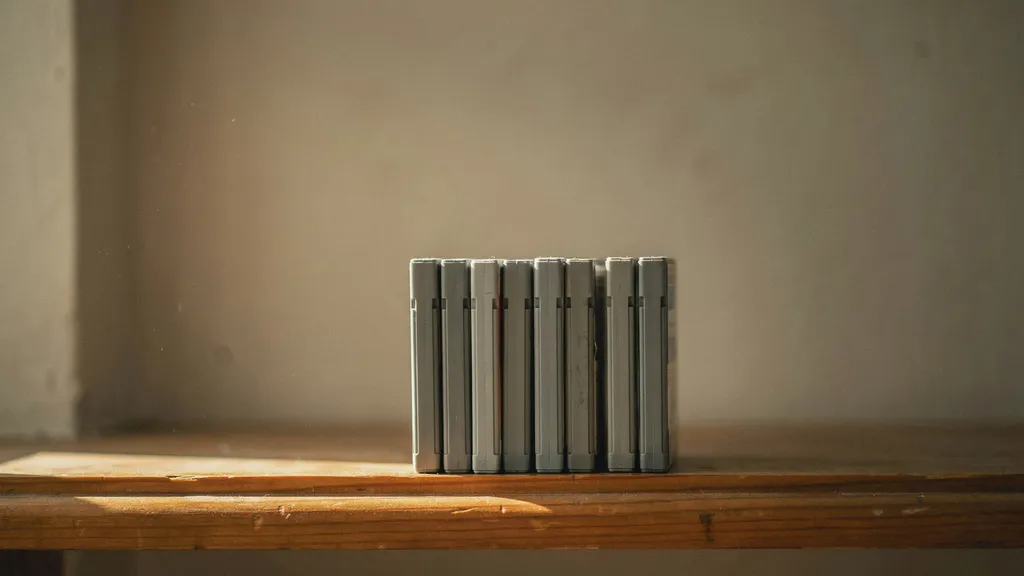
A gallery print about wear as evidence: the scuffed plastic, the faded label, the proof that something got used instead of collected. Enhanced matte paper, several sizes.
10. What do you do with a feeling you cannot replay?
You stop trying to reload it and you put it somewhere you can see it. Replaying the game almost never works, because the game was one ingredient and you cannot source the other four. What does work is keeping the era visible rather than functional: something on the wall that points at the feeling without asking you to prove the game holds up. That is the honest reason people hang this stuff. Not to pretend the pixels were better, but to keep an era in the room they live in now, in a form that has no difficulty curve.

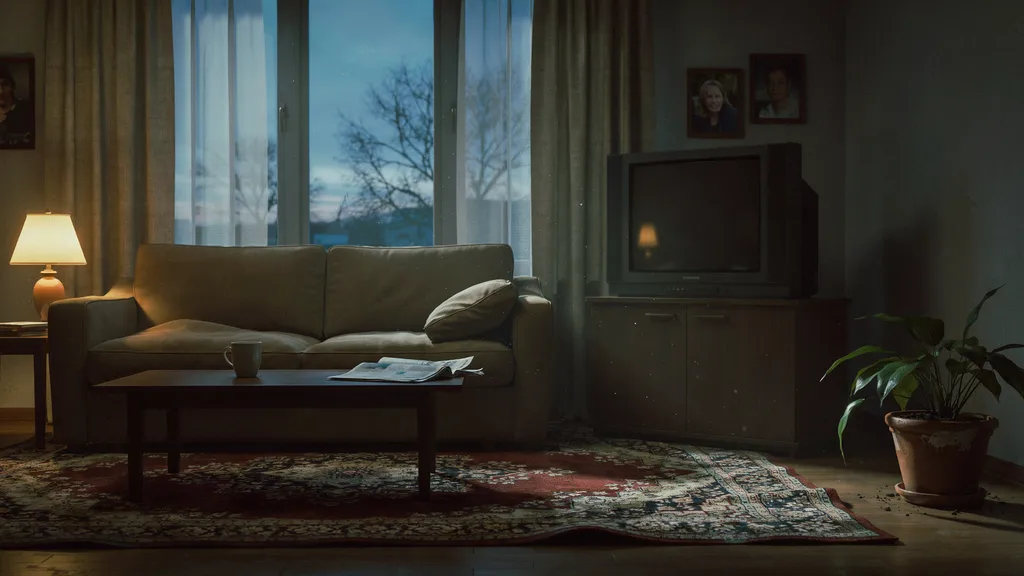
A still life in the old sense, arranged out of gaming objects instead of fruit and skulls. It is about time passing, which is what this whole feeling is actually about.
The real problem with how nostalgia gets sold
The market worked out that this feeling converts, and it now sells the feeling back to you at scale: the same recycled pixel font, the same anonymous neon grid, the same mass-produced indifference wearing a scanline filter. It is nostalgia with the specifics removed, which is the one thing nostalgia is made of. Your version has a particular room, a particular person and a particular year in it. Generic retro has none of that, and it never will. If you are building the room itself, start with retro gaming room ideas or the wider gaming room ideas guide.
Frequently asked questions
Why are old games so nostalgic?
Because they arrived during the reminiscence bump, roughly ages 10 to 30, when memories form most vividly and get built into your identity. Add imagination filling in what the hardware could not draw, scarcity forcing you to replay a few titles deeply, and a shared living room, and the memory ends up carrying far more than the game did.
Why were old games so much better?
Some genuinely were, and for real reasons: tight scope, no tutorials, no monetization loops, and a short experience built to be replayed. But most were not. Survivorship bias keeps the few masterpieces in the conversation and quietly deletes the hundreds of stiff, unfair and forgettable titles released alongside them.
Which game is the most nostalgic?
Whichever one you were playing at about age twelve. There is no universal answer, and lists that claim one are really reporting the age of the person writing them. Nostalgia is indexed to your birth year, not to quality, which is why two people can name completely different titles and both be correct.
What are the best nostalgic games?
The ones that still work without the memory attached. A useful test: hand it to someone who has no history with it. Puzzle games, side scrolling platformers with responsive controls, arcade racers and couch fighting games usually pass. Titles that leaned on novelty, a license or a cinematic reveal usually do not.
What were the nostalgic video games in the 2000s?
For anyone born in the early nineties, the nostalgic wave is now the 2000s: the first big open world sandboxes, split screen shooters played four to a television, extreme sports and rhythm games, and the early massively multiplayer worlds. The pattern repeats exactly one generation later, with different hardware and the same feeling.
Why isn't gaming fun anymore?
Usually because the conditions changed rather than the games. You have less unstructured time, an enormous library that turns play into browsing, and no one else in the room. Try the opposite of abundance: pick one game, finish it, and play it with someone physically present. That restores more of the feeling than any hardware purchase.
Keep the era in the room.
Gallery prints for people who know the games were often worse and still care. Made on demand, one at a time. Your Story, In Everyday Items.
Shop Gaming Posters →Made on demand. If a piece does not feel like it speaks your language, we will make it right.
Build the room around it: the gaming posters range, the rest of the gaming room decor, and the retro gaming room ideas guide.

